The tyre expiry date is not printed on a tyre. Instead, you work it out from the DOT code on the sidewall: the last four digits show the week and year the tyre was made. For example, 2324 means the 23rd week of 2024. Many tyre makers advise checking tyres every year once they are five years old and replacing them by ten years after manufacture at the latest, even if the tread looks fine. In Pakistan’s heat, rubber ages faster, so many drivers replace tyres sooner.
In this article
How to check tyre manufacturing date
- Look on the tyre’s sidewall for the letters DOT, followed by a string of letters and numbers.
- Find the last group of four digits, often inside an oval. This is the tyre date code.
- Read the first two digits as the week and the last two as the year.
| DOT code on tyre ends in | Made in |
|---|---|
| 0523 | 5th week of 2023 (around early February) |
| 2324 | 23rd week of 2024 (around early June) |
| 4625 | 46th week of 2025 (around mid-November) |
The full DOT code may be printed on only one side of the tyre, so check the inner sidewall too. Tyres made before 2000 used a three-digit code, and a tyre that old should not be on any car.
How long do tyres last?
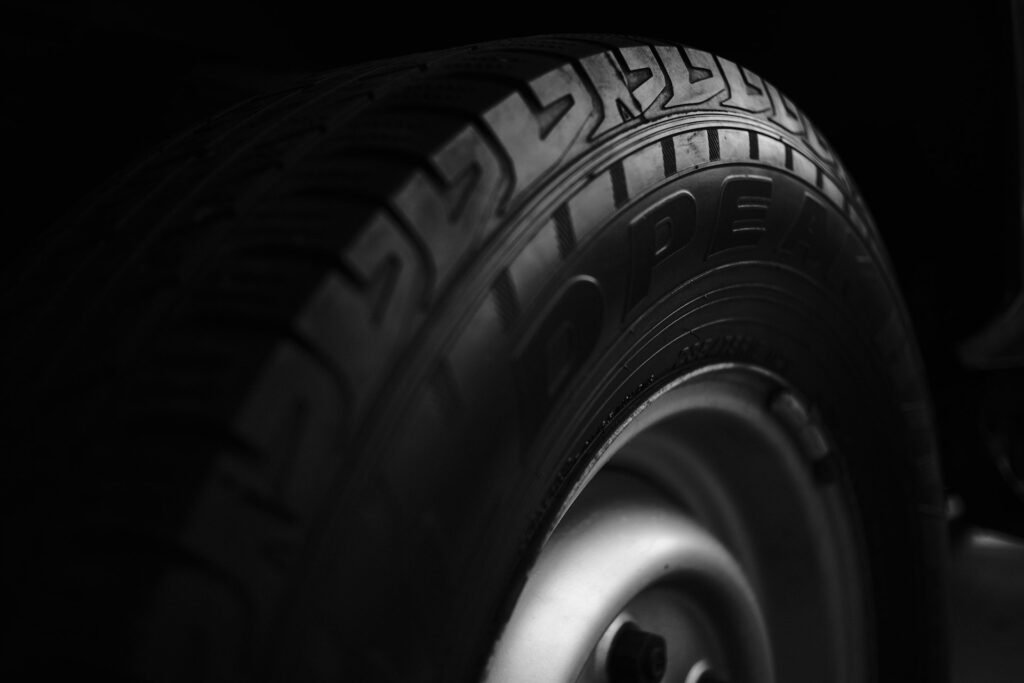
Two things wear a tyre out: tread wear from driving and rubber ageing over time. A tyre on a car driven a lot will usually wear out its tread first, often after 40,000 to 60,000 kilometres depending on the tyre and driving style. A tyre on a car that sits in the sun for long periods may crack from age before the tread is worn.
Tyres in hot weather
Heat, sunlight and ozone harden rubber and create small cracks. Pakistan’s long summers, with road surfaces far hotter than the air, speed this up. Park in shade where possible and keep tyres properly inflated, because under-inflated tyres run hotter.
Tyre expiry date: when to replace tyres
- Tyre tread depth is too low: many countries set a legal minimum of 1.6 mm, but grip in rain falls well before that; 3 mm is a sensible point to plan a replacement.
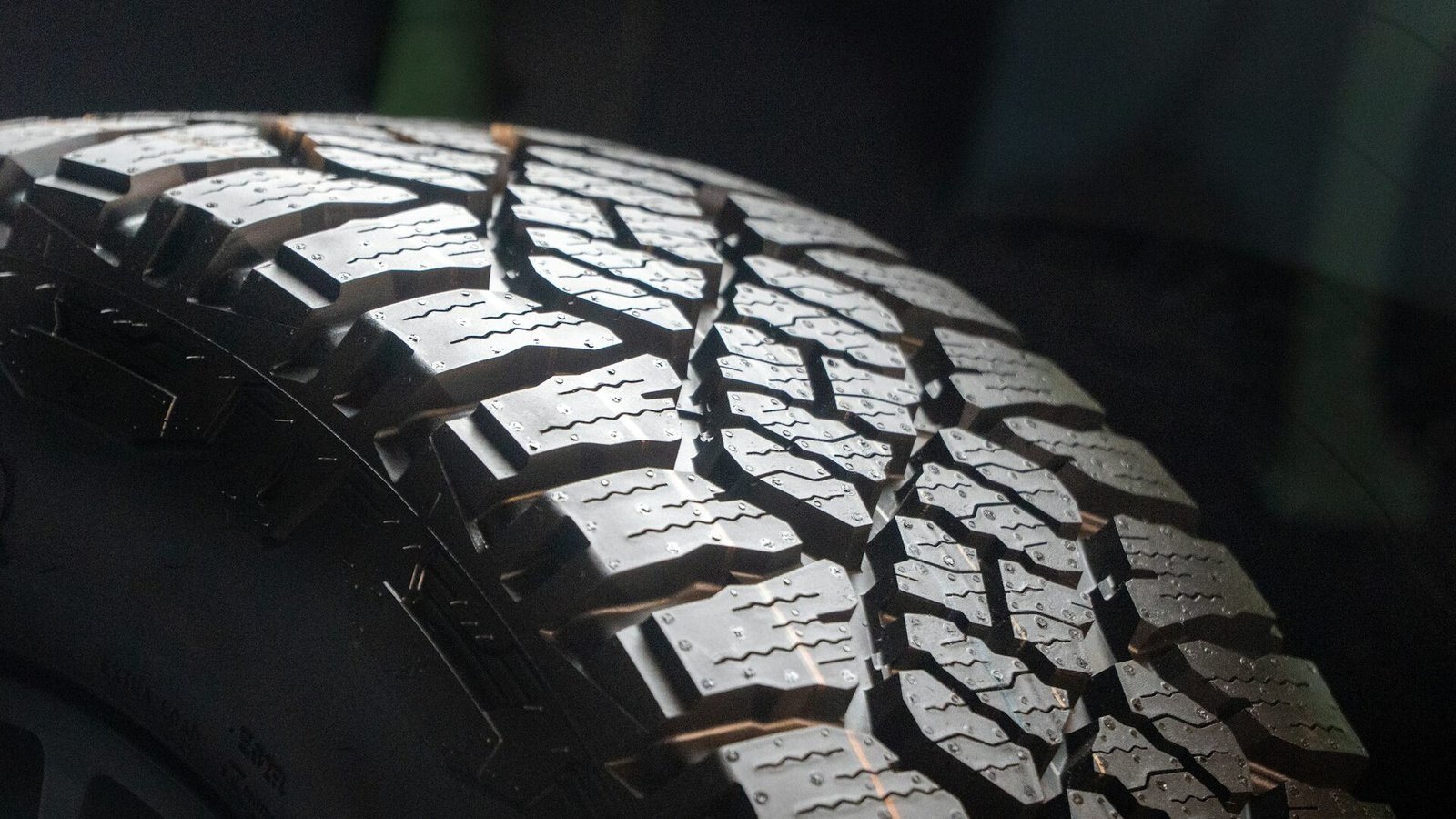
- The tread wear indicator is level with the tread: these are small raised bars inside the main grooves. When the tread is worn down to them, the tyre is finished.
- Tyre cracks appear in the sidewall or between tread blocks.
- Bulges or bubbles on the sidewall, which usually mean internal damage from a pothole. Replace the tyre immediately.
- The tyre is old: check yearly after five years and replace by ten years from manufacture at the latest, or sooner if the maker advises.
- Uneven wear, which suggests alignment or suspension problems that need fixing as well.
Old tyres and your spare tyre
Old tyres can look perfect and still fail at high speed. The spare tyre is often the oldest tyre on a car because it is rarely used. Check its date and pressure too, especially before a long trip on the motorway.
Tyre size meaning: reading the sidewall
A typical marking looks like 195/65 R15 91H:
- 195: width in millimetres.
- 65: sidewall height as a percentage of the width.
- R: radial construction.
- 15: wheel (rim) diameter in inches.
- 91: load index, the maximum weight each tyre can carry (91 means 615 kg).
- H: tyre speed rating, the maximum safe speed (H means 210 km/h).
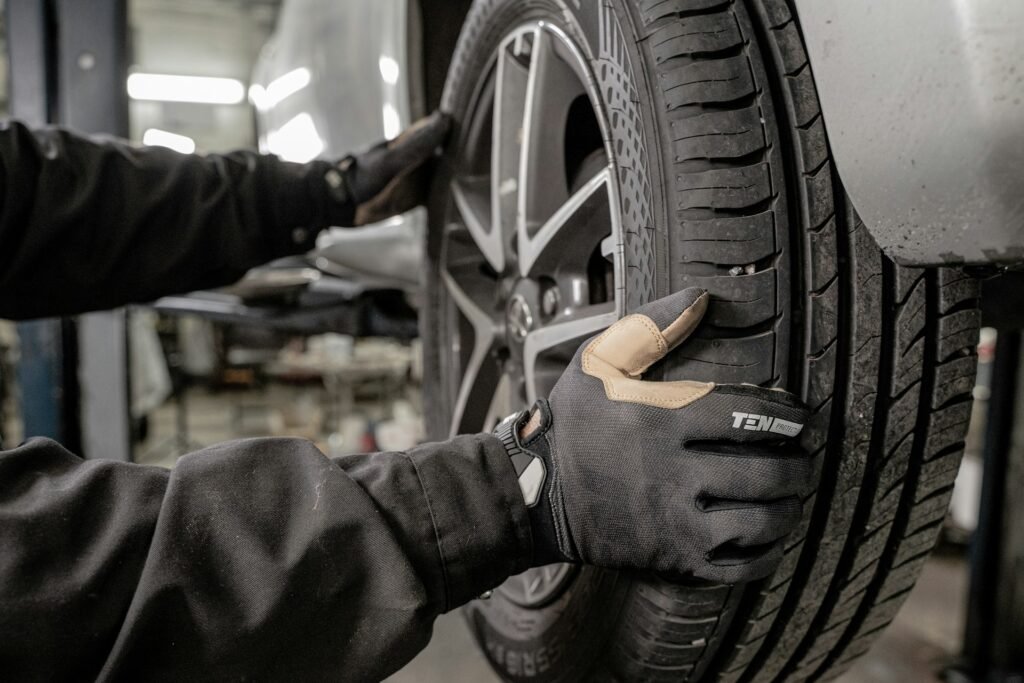
When replacing tyres, match the size, load index and speed rating shown in your car’s manual or on the sticker inside the driver’s door.
Simple tyre care that adds years
- Tyre pressure check: once a month and before long trips, with tyres cold. Use the pressure on the door sticker, not the maximum printed on the tyre.
- Tyre rotation: swap tyres between front and rear roughly every 10,000 kilometres, or as the manual says, so they wear evenly.
- Wheel alignment: get it checked if the car pulls to one side, after hitting a big pothole, or when you fit new tyres.
- Tubeless tyre puncture: a small nail-hole in the tread can usually be repaired with a proper plug-patch from inside. Punctures in the sidewall cannot be safely repaired.
Buying new tyres in Pakistan
When buying new tyres in Pakistan, always check the DOT date before fitting. A “new” tyre that has been sitting in a warehouse for years has already used up part of its life. Ask for tyres made within the last year where possible, and buy from reputable dealers who give a warranty.
Frequently asked questions
Where is the tyre expiry date?
There is no printed tyre expiry date. Use the last four digits of the DOT code to find the manufacture date, then judge age from that.
How do I check the tyre manufacturing date?
Find the DOT code on the sidewall. The last four digits show the week and year, so 2324 means week 23 of 2024.
What is the DOT code on a tyre?
A code required for tyres sold in the US and used worldwide, showing the factory, size code and date of manufacture.
How long do tyres last?
Often 40,000 to 60,000 km of tread, but age matters too. Check yearly after five years and replace by ten years from manufacture at the latest.
When should I replace tyres?
When tread reaches the wear indicators, or if you see cracks, bulges or cuts, or the tyres are too old.
What is the minimum tyre tread depth?
Many countries set 1.6 mm as the legal minimum, but plan to replace tyres at around 3 mm for safe grip in rain.
What is a tread wear indicator?
A small raised bar inside the tread grooves. When the tread wears down level with it, the tyre needs replacing.
Are tyre cracks dangerous?
Small surface cracks are a sign of ageing; deep cracks or any bulge mean the tyre should be replaced straight away.
What do the tyre speed rating and load index mean?
The load index is the maximum weight a tyre can carry; the speed rating letter is its maximum safe speed. Match both to your car’s specification.
Can a tubeless tyre puncture be repaired?
Small punctures in the tread usually can, with a proper internal plug-patch. Sidewall damage cannot be safely repaired.
How often should I do tyre rotation and wheel alignment?
Rotate roughly every 10,000 km or as your manual says, and check alignment if the car pulls to one side or after a hard pothole hit.
Should I check the date when buying new tyres in Pakistan?
Yes. Ask for recently made tyres, ideally under a year old, and check the DOT date before they are fitted.