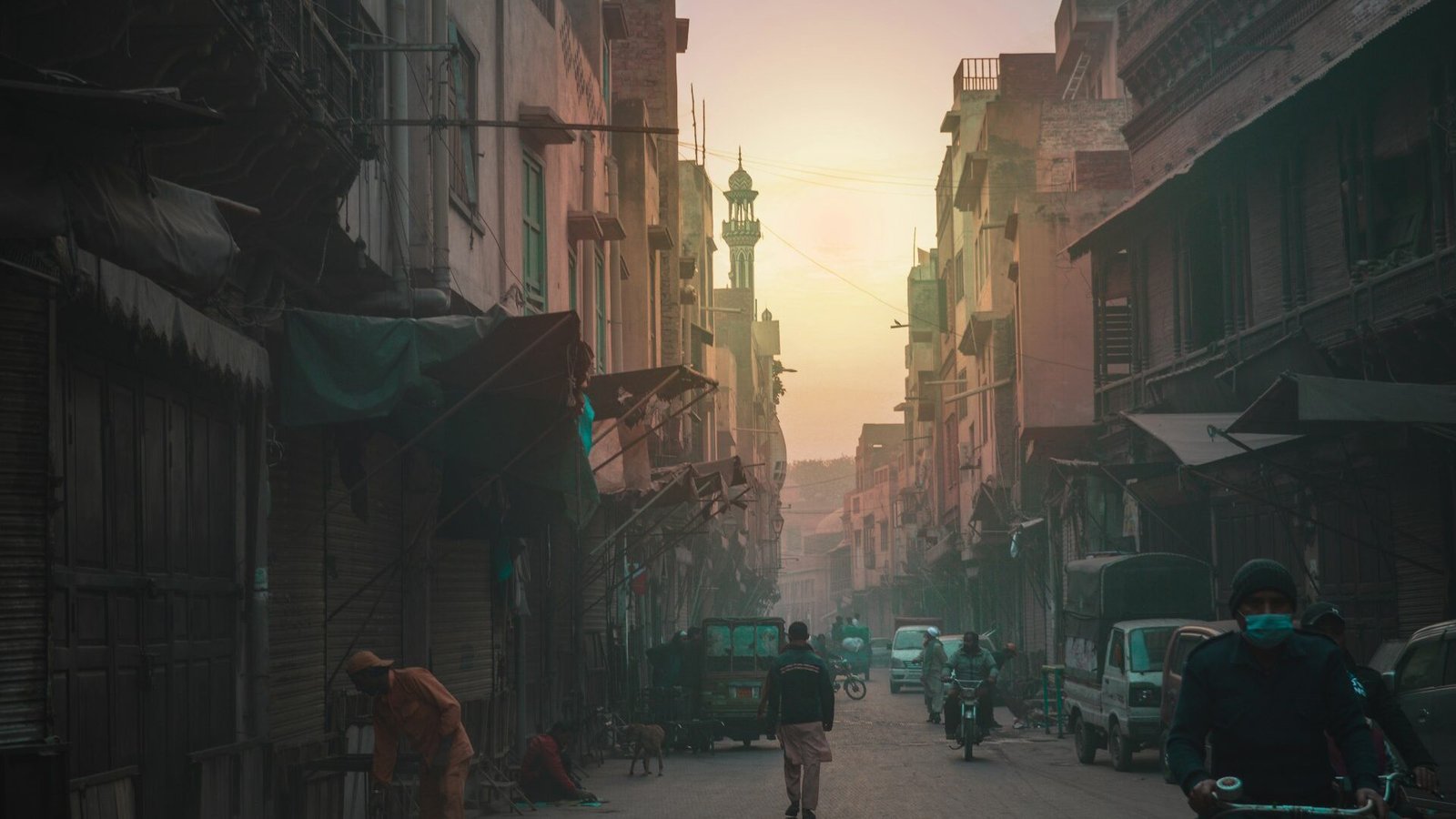
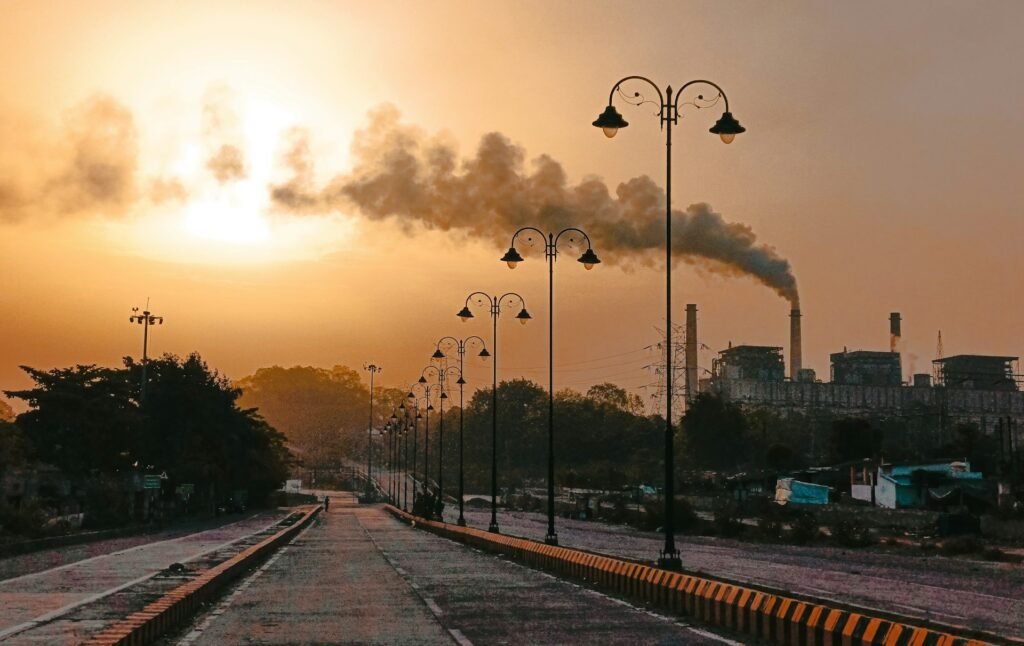
Smog is a thick haze of air pollution that settles over Lahore and much of Punjab every winter, usually from late October to January. It is made of tiny particles and gases from vehicles, factories, brick kilns, waste burning and crop residue burning, trapped close to the ground by cold, still air. In November 2026, Lahore again ranked among the world’s most polluted cities, with its Air Quality Index (AQI) repeatedly passing the “hazardous” level of 300.
In this article
What causes smog in Lahore?
- Vehicles: millions of cars, motorbikes and rickshaws, many with old engines and low-quality fuel.
- Industry and brick kilns: factories and kilns burning coal, wood, rubber and other fuels.
- Crop residue burning: farmers on both sides of the border burn rice stubble after the harvest.
- Waste burning and construction dust.
- Winter weather: a temperature inversion acts like a lid, trapping cold, polluted air near the ground, while light winds fail to blow it away.
What is AQI, and how do you read it?
The Air Quality Index turns pollution measurements into a single number. Most apps and websites in Pakistan, including IQAir, use the US scale:
| AQI | Category | What to do |
|---|---|---|
| 0–50 | Good | Normal activity |
| 51–100 | Moderate | Very sensitive people take care |
| 101–150 | Unhealthy for sensitive groups | Children, elderly and people with asthma reduce outdoor exertion |
| 151–200 | Unhealthy | Everyone reduces long outdoor activity |
| 201–300 | Very unhealthy | Avoid outdoor exercise; wear a mask outside |
| 301+ | Hazardous | Stay indoors as much as possible |
The most harmful pollutant in smog is PM2.5: particles smaller than 2.5 micrometres, about thirty times thinner than a human hair. The World Health Organization’s guideline is that 24-hour PM2.5 levels should not exceed 15 micrograms per cubic metre on most days. During the first week of November 2026, Lahore’s average was more than thirteen times that level.
How does smog affect your health?
- Short term: burning eyes, sore throat, coughing, headaches, chest tightness and asthma attacks.
- Lungs: fine particles reach deep into the lungs, worsening asthma, bronchitis and chronic lung disease.
- Heart: PM2.5 can enter the bloodstream and is linked to heart attacks and strokes.
- Children: they breathe faster and their lungs are still developing, so they are especially vulnerable.
- Long term: years of exposure are linked to reduced lung function, heart disease and lung cancer.
Those most at risk are young children, older people, pregnant women, and anyone with asthma, heart or lung disease.
How to protect yourself and your family
- Check the AQI every morning on a reliable app or the Punjab government’s air quality dashboard, and plan your day around it.
- Wear the right mask outdoors. Cloth and surgical masks do little against PM2.5. A well-fitted N95 or KN95 mask, covering nose and chin with no gaps, offers much better protection.
- Limit outdoor exercise on high-AQI days, especially early morning and late evening, when smog is often thickest. Exercise indoors instead.
- Keep windows and doors closed when the AQI is high, and seal obvious gaps.
- Use an air purifier with a HEPA filter in the room where your family sleeps, if you can afford one; close the room’s door so it works effectively.
- Avoid adding indoor pollution: do not burn wood, rubbish or coal indoors.
- Drink plenty of water and rinse your eyes with clean water if they sting.

When to see a doctor
Seek medical help quickly if you or a family member has difficulty breathing, wheezing that does not settle, chest pain, a cough with blood, or if a child is breathing very fast or seems unusually drowsy. People with asthma should keep their inhalers with them and follow their doctor’s action plan.
What is being done about it?
Punjab’s government has introduced measures such as converting brick kilns to cleaner “zigzag” technology, fining crop burning, testing vehicle emissions, and closing schools or markets on the worst days. Experts say lasting improvement requires cleaner fuels and vehicles, better public transport, alternatives to stubble burning and cooperation across the border, since smog does not respect boundaries.
Frequently asked questions
Why is there smog in Lahore every winter?
Emissions from traffic, industry, kilns and crop burning are trapped near the ground by cold, still winter air.
What AQI level is dangerous?
Above 150 is unhealthy for everyone; above 300 is classed as hazardous.
Which mask is best for smog?
A well-fitted N95 or KN95 mask. Cloth and surgical masks offer little protection against fine particles.
Is it safe to go for a walk in smog?
On high-AQI days it is better to exercise indoors, especially for children, older people and anyone with asthma.
Does an air purifier help?
Yes, a purifier with a HEPA filter can noticeably reduce particles in a closed room.
What is PM2.5?
Tiny particles 2.5 micrometres across or smaller, about 30 times thinner than a hair. They can travel deep into the lungs and even into the blood.
What does AQI mean?
Air Quality Index, a scale usually running from 0 to 500. The higher the number, the more polluted the air and the greater the health risk.
What are the symptoms of smog exposure?
Burning or watery eyes, sore throat, cough, chest tightness and breathlessness. Seek medical help if breathing becomes hard or symptoms do not settle.
Does a cloth mask protect from smog?
Not much. Cloth and thin surgical masks let most fine particles through. A well-fitting N95 or KN95 mask works far better.
Who is most at risk from smog?
Children, older people, pregnant women and anyone with asthma, heart or lung disease. Keep them indoors on bad days and follow their doctor’s advice.