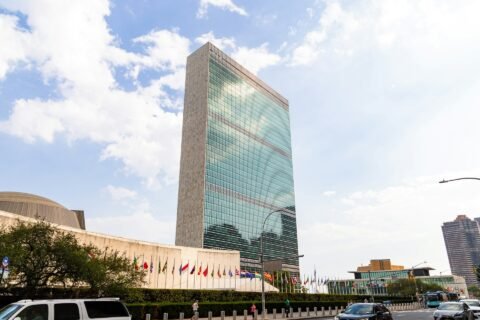
There are 195 countries in the world, according to the most widely used count. That figure is made up of the 193 member states of the United Nations plus its two non-member observer states, the Holy See (Vatican City) and the State of Palestine. Other lists give slightly different totals because a handful of places govern themselves but are recognised by only some countries.
In this article
Why 195 is the standard answer
There is no single global authority that decides what counts as a country. Membership of the United Nations is the closest thing to an agreed test, because joining requires a recommendation from the Security Council and a two-thirds vote in the General Assembly. That is why most atlases, schools and news organisations start from the UN’s 193 members.
The Holy See and Palestine are added because the UN gives them permanent observer status: they take part in UN work and are treated as states by many governments, but they do not have a vote in the General Assembly. Read more about how membership works in our explainer on what the United Nations is and how it works.
What makes a place a country?
International lawyers often point to the Montevideo Convention of 1933, which lists four qualities of a state:
- a permanent population;
- a defined territory;
- a government;
- the capacity to enter into relations with other states.
In practice, recognition by other countries matters just as much. A territory can tick every box on that list and still struggle to trade, travel or join international bodies if most governments refuse to recognise it.

The places that make the count difficult
A few territories sit in a grey zone. Some lists include them, most do not.
| Place | Situation |
|---|---|
| Taiwan | Has its own government, military and currency, but is formally recognised by only about a dozen UN members. China claims it as part of its territory. |
| Kosovo | Declared independence from Serbia in 2008 and is recognised by roughly half of UN members, but not by Serbia, Russia or China. |
| Western Sahara | Disputed between Morocco, which controls most of it, and the Polisario Front’s Sahrawi Arab Democratic Republic. |
| Northern Cyprus | Recognised only by Turkey. |
| Somaliland | Has run its own affairs since 1991 but has very little formal recognition. |
| Abkhazia and South Ossetia | Breakaway regions of Georgia recognised by Russia and a few other states. |
Add Taiwan and Kosovo to the 195, for example, and you reach 197. Other lists go higher still if they include more disputed territories.
Different organisations, different numbers
Counts also change depending on the purpose of the list:
- The United Nations: 193 members and 2 observers.
- FIFA: 211 member associations, because England, Scotland, Wales and Northern Ireland play separately, and territories such as Hong Kong and Gibraltar have their own teams.
- The International Olympic Committee: 206 national Olympic committees.
- Governments: each keeps its own list of the states it recognises, and these lists differ.

What is the newest country in the world?
South Sudan is the newest widely recognised country. It became independent from Sudan on 9 July 2011, after a referendum in which almost all voters chose to separate, and joined the UN a few days later. No new UN member has been admitted since.
Countries by continent
Africa has the most UN member states, with 54. Counts for the other continents vary slightly depending on where you draw lines, such as whether Russia and Turkey are counted in Europe or Asia, and which continent Egypt or Cyprus belongs to. Asia and Europe each have well over 40 countries, while Oceania has 14 UN members, from Australia to tiny Pacific nations such as Tuvalu and Nauru.
Largest, smallest and most populous
| Record | Country | Detail |
|---|---|---|
| Largest by area | Russia | About 17.1 million km², roughly a ninth of the world’s land |
| Smallest by area | Vatican City | About 0.44 km², inside the city of Rome |
| Most populous | India | Overtook China in 2023, according to UN estimates |
| Smallest UN member by population | Tuvalu | Around 10,000 people (Vatican City is smaller but is not a UN member) |
Pakistan, for comparison, is one of the most populous countries in the world, with more than 240 million people counted in the 2023 census.
Did you know?
Recognition is a choice each government makes. Pakistan, for example, does not recognise Israel or Armenia, while most UN members recognise both. That is one reason why no two foreign ministries keep exactly the same list.
Will the number change?
New countries are rare, but they do appear. Independence referendums, peace agreements or wider recognition of a territory such as Kosovo could all change the count in future. Until then, 195 remains the safest answer for school projects, quizzes and travel goals.
Frequently asked questions
How many countries are there in the world in 2026?
195: the 193 UN member states plus the Holy See and Palestine.
How many countries are in the UN?
193.
Is Taiwan a country?
Taiwan governs itself, but it is not a UN member and only about a dozen UN members formally recognise it, so most counts leave it out.
What is the newest country?
South Sudan, independent since 9 July 2011.
Which continent has the most countries?
Africa, with 54 UN member states.
Why do people say there are 195 countries?
Because the UN has 193 member states and two permanent observer states, the Holy See (Vatican City) and the State of Palestine.
Which is the largest country in the world?
Russia, by area. It covers more than 17 million square kilometres.
Which is the smallest country in the world?
Vatican City, at about 0.44 square kilometres.
Which country has the most people?
India, which passed China in 2023 according to UN estimates.
Where does Pakistan rank by population?
Pakistan is the fifth most populous country, after India, China, the United States and Indonesia, according to UN estimates.