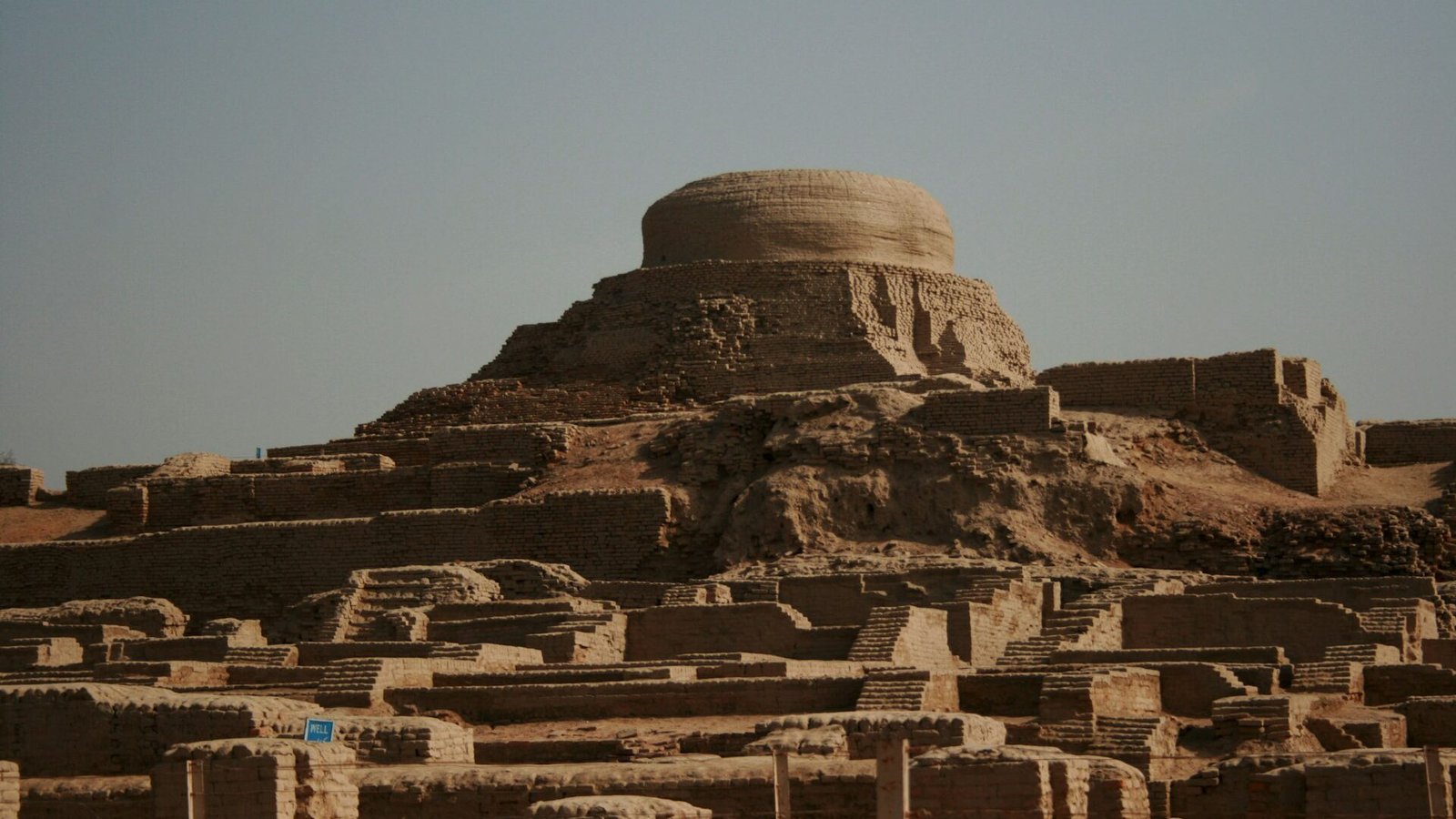
The Indus Valley Civilisation, also called the Harappan Civilisation, was one of the world’s first great urban cultures. It flourished from about 2600 to 1900 BCE along the Indus River and its tributaries, mostly in what is now Pakistan. Its people built carefully planned cities such as Mohenjo-daro in Sindh and Harappa in Punjab, with straight streets, brick houses, wells and covered drains, at the same time as the pyramids were being built in Egypt.
In this article
Where was the Indus Valley Civilisation?
The civilisation covered a huge area, larger than ancient Egypt and Mesopotamia combined. Sites stretch from Balochistan and the Makran coast to Punjab, Sindh, Gujarat and the edges of Haryana and Rajasthan in India. Most of its best-known cities lie in Pakistan:
- Mohenjo-daro, near Larkana in Sindh, the largest and best-preserved city.
- Harappa, in Sahiwal district, Punjab, the site that gave the civilisation its name.
- Ganweriwala, in the Cholistan desert, a large city still mostly unexcavated.
- Mehrgarh, in Balochistan, an earlier farming village dating back to around 7000 BCE that shows how the region’s culture developed.
How were Harappa and Mohenjo-daro discovered?
Local people had long known about the brick mounds, and in the 1800s railway builders even used bricks from Harappa as ballast. Serious excavation began in the 1920s: Daya Ram Sahni dug at Harappa in 1921, and R. D. Banerji identified Mohenjo-daro in 1922. In 1924, John Marshall, head of the Archaeological Survey of India, announced that a previously unknown civilisation had been found.
What made these cities so advanced?
What still impresses archaeologists is how organised Indus cities were:
- Town planning: streets ran in a grid, and most cities had a raised “citadel” area and a larger lower town.
- Standard bricks: baked bricks were made in consistent proportions across hundreds of kilometres.
- Water and drains: many homes had their own wells and bathing areas, connected to covered drains along the streets.
- Standard weights: traders used carefully cut stone weights following a common system, suggesting organised commerce.
- Crafts: artisans made fine beads from carnelian and other stones, pottery, copper tools and carved stone seals.
The Great Bath
Mohenjo-daro’s most famous structure is the Great Bath, a large watertight tank built of fitted bricks sealed with natural tar. It measures about 12 by 7 metres and was reached by steps at each end. Many historians believe it was used for ritual washing, though its exact purpose is unknown.
Trade with distant lands
Indus merchants traded far beyond the river valley. Indus seals and beads have been found in Mesopotamia, in modern Iraq, and many scholars believe the land called “Meluhha” in Mesopotamian texts refers to the Indus region. Goods such as timber, precious stones, cotton and ivory are thought to have travelled by sea along the Arabian Sea coast.
The mystery of the Indus script
Thousands of short inscriptions survive, mostly on small square seals carved with animals such as bulls and elephants. But the Indus script has never been deciphered. The texts are very short, usually only a few signs, and no bilingual inscription has been found to act as a key. Until the script is read, we do not know what language the people spoke or what they called themselves.
Why did the Indus Valley Civilisation decline?
There was no single dramatic collapse. From about 1900 BCE, the big cities were slowly abandoned and people moved to smaller villages, often further east. Researchers point to several likely causes working together:
- Climate change: evidence suggests the monsoon weakened over several centuries, reducing rainfall.
- Shifting rivers: rivers changed course or dried up, leaving some cities without reliable water.
- Trade decline: long-distance trade with Mesopotamia dropped off.
An older theory that the cities were destroyed by invaders is no longer widely accepted by archaeologists.
Visiting Mohenjo-daro and Harappa today
Both sites are open to visitors and have small museums. Mohenjo-daro is about 30 kilometres from Larkana, and Harappa is near Sahiwal, a short drive off the Lahore–Multan route. The National Museum of Pakistan in Karachi holds some of the most famous finds, including the stone bust known as the “Priest-King”. The best time to visit is from November to February, when the weather is cooler.
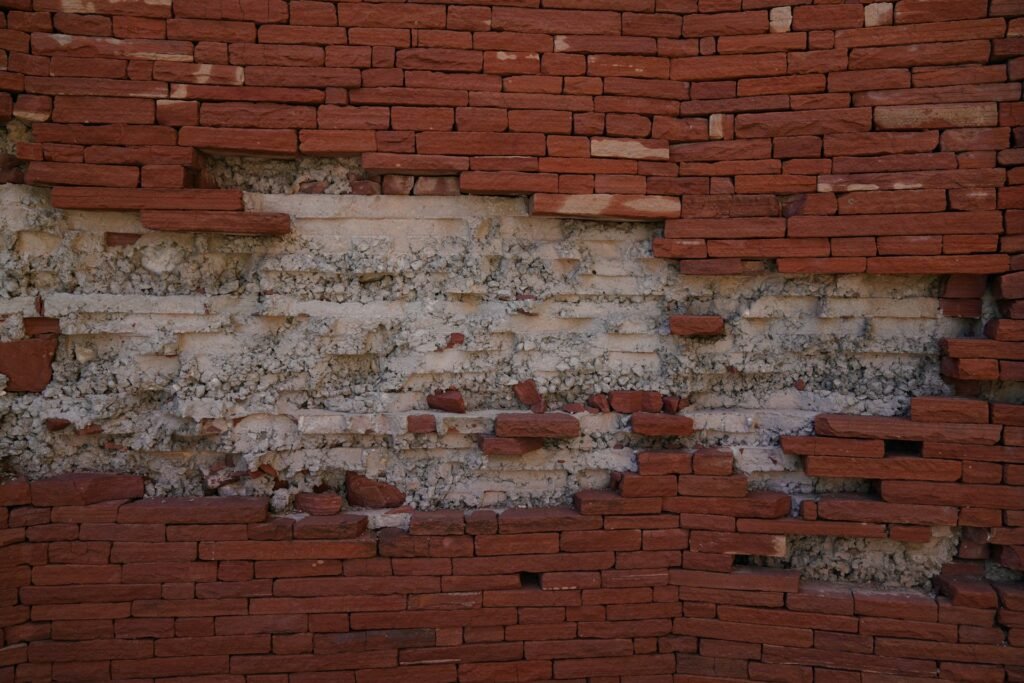
Mohenjo-daro is fragile: salt in the groundwater and floods damage the ancient bricks. Visitors are asked not to climb on walls or remove anything from the site.
Frequently asked questions
How old is Mohenjo-daro?
About 4,500 years old. It was built around 2500 BCE.
Where is Harappa located?
In Sahiwal district, Punjab, Pakistan.
Has the Indus script been deciphered?
No. Despite many attempts, it remains unread.
Why is it called the Indus Valley Civilisation?
Because its cities grew up along the Indus River and its tributaries.
Is Mohenjo-daro a UNESCO World Heritage Site?
Yes. It was listed in 1980.
What was the Great Bath of Mohenjo-daro?
A large brick-lined pool made watertight with bitumen, found on the citadel mound. Many archaeologists think it was used for ritual bathing.
Why did the Indus Valley Civilisation decline?
There was probably no single cause. A weaker monsoon, rivers changing course and falling trade seem to have led people to leave the big cities gradually after about 1900 BCE.
Who did the Indus people trade with?
With Mesopotamia and the Gulf, among others. Indus seals and carnelian beads have been found in Mesopotamian cities, whose texts may call the Indus region Meluhha.
What is the Priest-King statue?
A small carved stone figure of a bearded man found at Mohenjo-daro. It is kept at the National Museum of Pakistan in Karachi.
Can you visit Mohenjo-daro?
Yes. It is in Larkana District, Sindh, and has a site museum. The cooler months from November to February are the most comfortable time to go.